As I am back in college, working on my master’s degree, I have been doing a lot of writing. Thankfully, the class I’m currently taking, Interdisciplinary Studies, aligns almost perfectly with my job as an inspector. This allows me to draw on my inspection experience, using it as source material for the many writing assignments that come with a college-level course.

What follows is a recent paper that I wrote about the integration necessary to be a successful home inspector, drawing correlations between my career and the ideas discussed in my school book, Introduction to Interdisciplinary Studies.. Hopefully, it helps to illustrate the idea that a good inspector needs to have a broad level of skills to succeed in this industry.
When someone embarks on an inspection career, they quickly realize that the home inspection industry is an inherently interdisciplinary field. An inspector is required to integrate knowledge from various disciplines, such as electrical, HVAC, and plumbing, to draw more informed conclusions regarding the condition of the subject property. This process closely resembles (the authors) Repko et al.’s characterization of interdisciplinarity as drawing upon disciplinary perspectives and integrating their “insights and modes of thinking” to develop a broader understanding of a complex problem (114).
From the perspective of a professional inspector, a house is primarily a combination of systems of interacting components rather than a collection of isolated parts. This perspective is reflected in the rules of the Louisiana State Board of Home Inspectors (Louisiana State Board of Home Inspectors § 305.B.2). My knowledge of each individual component is essential, but my role as an inspector requires that I build connections between these silos of information in order to develop a better understanding of the system as a whole.
Much of the evidence that we use to draw our conclusions (and draft our reports) is gathered by direct observation: what we actually see when we are doing an inspection. Inspectors are concerned with cause, consequence, and risk. We take the practical knowledge gathered by observation and diagnosis and integrate it with our technical knowledge to provide our clients with a better understanding of the property they are considering purchasing.
This interdisciplinary model serves us well, as we are, all too often, tasked with drawing conclusions based on insufficient evidence. But while interdisciplinarity is helpful, it cannot eliminate all uncertainty. As we are unable to do things like tear walls apart to see inside them, we are left to ascertain what is observable, determine what can be inferred, and explain what remains unknown. This situation calls for an interesting degree of epistemic humility, making certain that we convey the limits of our knowledge and take a measured approach toward claims of certainty.

Obviously, home inspectors must pay attention to numerous phenomena, examining thousands of data points during each inspection. We are required to take a systems approach, incorporating our direct findings regarding a specific house with our knowledge of the various disciplines (e.g., structure, roofing, electrical, plumbing, HVAC, insulation, moisture, heat transfer, airflow).
When I am inspecting someone’s roof, the knowledge I possess in the roofing domain is important and necessary for the job, but, in isolation, it is often not sufficient for me to draw an integrated conclusion. My knowledge of framing, insulation, ventilation, and HVAC equipment all come into play (hence, the systems approach) when I am attempting to find an explanation for why there is a moisture problem, exemplifying the type of integration that Repko et al. describe as being “at the heart of the interdisciplinary process” (138).
Unfortunately, this level of knowledge does not come without a downside. As we are erroneously viewed as the ultimate subject-matter expert, we can find ourselves in the unenviable position of being expected to provide definitive answers in an often-ambiguous situation.
A home inspection rarely results in absolute knowledge. Instead, inspectors develop provisional conclusions based on a combination of observations, measurements, technical knowledge, and experience. Our job is not exclusively empirical; we rely heavily on our reasoning. We may see staining and possible microbial growth in an area and infer that a moisture pathway exists even when the actual source of the problem is concealed.
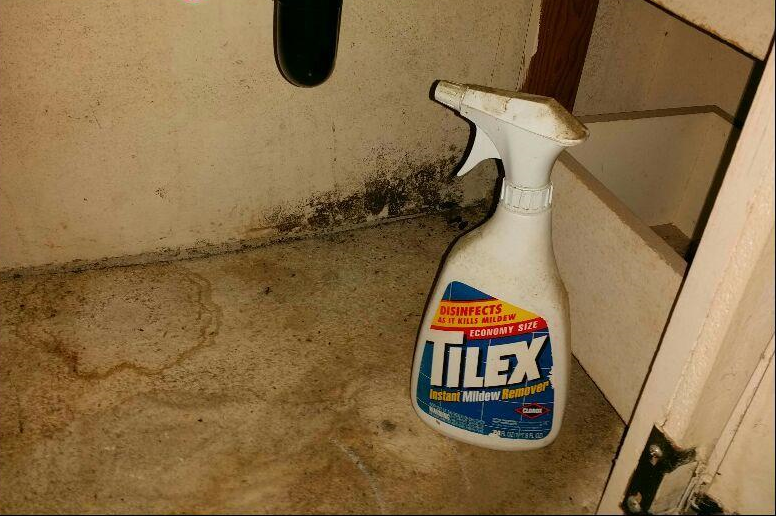
Epistemologically, a home inspector’s job can be described as empiricism combined with disciplinary knowledge, guided by reasoning and professional judgment. We combine what we know with what we observe and what we have learned from experience to develop explanations for things we cannot directly ascertain.
As a result of the lessons learned in the inspection industry, I have come to understand that even though knowledge claims must be grounded in evidence, they often remain constrained by uncertainty. It is our job, as professional inspectors, to connect the dots and provide our clients with enough information to make an informed decision regarding their new home purchase.
Works Cited
Louisiana State Board of Home Inspectors. “Chapter 3. Standards of Practice.” Louisiana Administrative Code, title 46, pt. XL, Aug. 2025, lsbhi.state.la.us PDF
Repko, Allen F., et al. Introduction to Interdisciplinary Studies. 4th ed., SAGE Publications, 2026.
Would you like to get an email every Friday where we share the newest things we’ve discovered about home inspections? CLICK HERE to sign up.
Want to be an Influencer in Your Field? Share This Post!
Thanks, Joe